|

The optimistic cure rate of 90% anticipated in 1845 never materialized. In 1900, less than 20% were discharged as "recovered" or "improved." That number fell to about 14% in 1930. Patients spent the greater part of their lives in the wards, amidst overcrowded conditions. They sat quietly in rocking chairs all day with only their thoughts for company because attendants discouraged conversation and noise. After World War II, though, public interest in mental health issues grew. That was reflected at Fulton, as the hospital attempted to provide more normal living conditions for the patients.
"When you are in a place like this for years on end and you seem to be lost to all the world you grow to feel that you belong to the place and everyone here belongs to you. In place of the loved ones who no longer seem to care you learn to feel a kinship and sympathy with all the lonely shadows among whom you move."
From Hospital Highlights, 1956.
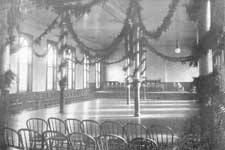 Wards decorated for Christmas, c. 1910. Wards decorated for Christmas, c. 1910.
Fulton State Hospital
|