|

Electroshock Therapy
The use of certain treatments for mental illness changed with every medical advance. Although hydrotherapy, metrazol convulsion, and insulin shock therapy were popular in the 1930s, these methods gave way to psychotherapy in the 1940s. By the 1950s, doctors favored artificial fever therapy and electroshock therapy. Describing the process of electroshock in 1957, a patient wrote:
"Patients were generally on [electroshock] treatment twice a week--two days for the women (Mondays and Thursdays) and two days for the men (Tuesdays and Fridays). Promptly at 7:30 treatment patients were rounded up by the cry, 'Treatment patients git to the door.' Begging, pleading, crying, and resisting, they were herded into the gymnasium and seated around the edge of the room.
Between them and the shock treatment table was a long row of screens. The table on the other side of the screen held as much terror for most of these patients as the electric chair in the penitentiaries did for criminals... In order to save time, one or more patients were called behind the screen to sit down and take off their shoes while the patient who had just preceded them was still on the table going through the convulsions that shake the body after the electric shock has knocked them unconscious.
One attendant stands at the head of the table to put the rubber heel in their mouth so they won't chew their tongue during the convulsive stage. On either side of the table stand three other attendants to hold them down...The only comforting thing from those times was the sight of some of the quieter and more controlled patients comforting the terror-stricken ones. I can remember many a friendly hand placed on mine--many a comforting shoulder I leaned against while I waited my turn... This has changed somehow now I am glad to say, and treatments are not quite so inhumanely administered--but I hope to see the day when they will be entirely replaced by the new drugs now coming into use as tranquilizers."
|
Hydrotherapy
Exposing patients to baths or showers of warm water for an extended period of time often had a calming effect on them. For this reason, mental hospitals used hydrotherapy as a tool for treating mental illness.
|
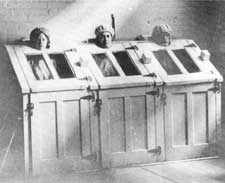
Patients in steam cabinets, c 1910.American Psychiatric Association Archives
|
|